If this is your first visit, be sure to
check out the FAQ by clicking the
link above. You may have to register
before you can post: click the register link above to proceed. To start viewing messages,
select the forum that you want to visit from the selection below. Also, before requesting
codes, note that there is a main site, which may contain what you
are looking for already. Also, if you know what you want, feel free to
search for it directly.
Kids scared of the Easter Bunny? Well, look at him!
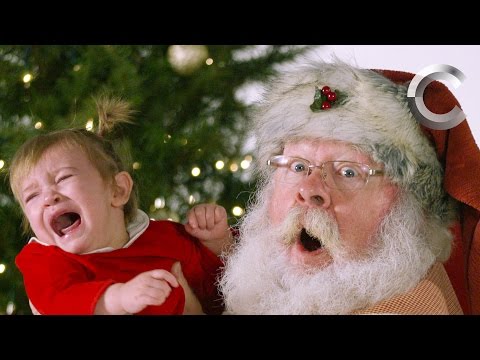
It has been well-documented that those mall Santas can scare the heck out of little kids, and they are just big-bellied dudes in a red suit. So it's no surprise a large-eared, giant bunny in fake fur elicits fear.
Yes, the Easter Bunny terrifies many of the kids of TODAY fans who shared photos on Facebook of their little ones having less-than-joyous reactions to the big rabbit.
Given some of the downright scary costumes these Easter Bunnies are wearing, we totally empathize with the kiddos and hope that jelly beans and Peeps were a part of their post-photo-op recovery.
We all know Santa Claus. He’s on every song, picture, toys, and many more every Christmas. Most importantly he’s the image of Christmas itself. But why is it that he makes kids cry?
Santa dresses weird, almost like a specialized type of clown without makeup. Clowns are creepy.
The Easter bunny is weird, especially big adult sized rabbits with open mouths ready to eat small children. Aside from the fun of egg hunting, how did this ever become a thing every year?
In fact, the symbol of a circle of three hares joined by their ears has been found in a number of churches in Devon. Like much of our cultural "bunny” symbolism, the meaning of this image remains mysterious – and The Three Hares Project has been set up to research and document occurrences of the ancient symbol, examples of which have been found as far away as China.
Rabbits and hares have also been associated with Mary, mother of Jesus, for centuries. Their association with virgin birth comes from the fact that hares – often conflated mistakenly with rabbits – are able to produce a second litter of offspring while still pregnant with the first.
Virginity or fertility?
Titian’s painting The Madonna of the Rabbit depicts this relationship. Mary holds the rabbit in the foreground, signifying both her virginity and fertility. The rabbit is white to convey her purity and innocence.
Linking rabbits with purity and virginity is odd, however, since they’re also associated with prolific sexual activity, a reputation Hugh Hefner appropriated for his now infamous Playboy logo.
Hefner claims that he chose a rabbit as the logo for his empire because the bunny is “a fresh animal, shy, vivacious, jumping – sexy. First it smells you, then it escapes, then it comes back, and you feel like caressing it, playing with it. A girl resembles a bunny. Joyful, joking.”
Hefner’s striking sexism aside, rabbits’ reputation for fecundity has also meant that they’ve been used as a symbol of fertility for centuries and have become associated with spring.
Ye olde Saxon mythe
Indeed, some folklorists have suggested that the Easter Bunny derives from an ancient Anglo-Saxon myth, concerning the fertility goddess Ostara.
The Encyclopedia Mythica explains that:
Ostara is the personification of the rising sun. In that capacity she is associated with the spring and is considered a fertility goddess. She is the friend of all children and to amuse them she changed her pet bird into a rabbit. This rabbit brought forth brightly colored eggs, which the Greek goddess gave to children as gifts. From her name and rites the festival of Easter is derived.
Indeed, in his 1835 book Deutsche Mythologie, Jacob Grimm states that “the Easter Hare is unintelligible to me, but probably the hare was the sacred animal of Ostara … Ostara, Eástre seems therefore to have been the divinity of the radiant dawn, of up-springing light, a spectacle that brings joy and blessing, whose meaning could be easily adapted by the resurrection-day of the Christian’s God.”
The myth of Ostara, then, has become a popular theory for the derivation of the Easter Bunny – although it is a contested one.
Either way, it seems that the association between the Easter Bunny and Ostara began with the 8th-century scholar the Venerable Bede in his work The Reckoning of Time. Bede said that our word “Easter” stems from “Eostre” (another version of the name “Ostara”). There is, however, no other historical evidence to support his statement.
Modern bunnies
The earliest reference to an egg-toting Easter Bunny can be found in a late 16th century German text (1572). “Do not worry if the Easter Bunny escapes you; should we miss his eggs, we will cook the nest,” the text reads. A century later, a German text once again mentions the Easter Bunny, describing it as an “old fable”, and suggesting that the story had been around for a while before the book was written.
In the 18th century, German immigrants took the custom of the Easter Bunny with them to the United States and, by the end of the 19th century, sweet shops in the eastern states were selling rabbit-shaped candies, prototypes of the chocolate bunnies we have today.
So whether bunnies are unclean, symbols of prolific sexual activity, or icons of virginity, the enigmatic Easter Bunny looks likely to remain a central part of Easter celebrations – recently, one was even involved in a surreal mass brawl in a New Jersey shopping center.
Just where they came from, however, will probably have to remain a mystery.
Every year, thousands of families, church groups, and event planners enlist entertainment companies to dispatch a costumed bunny for their Easter celebrations. These performers often endure oppressive heat, frightened children, and other indignities to bring joy to the season.
It can be a thankless job, which is why Mental Floss approached several hares and their handlers for some insight into what makes for a successful appearance, the numerous occupational hazards, and why they can be harassed while holding a giant carrot. Here’s a glimpse of what goes on under the ears.
Do you want to see something funny? Then I am right place, most comedians said that create your own happiness, so there are many ways to create but i suggest you choose to create happiness using symbols, you can generate your own symbols and share with others, so choose the triangle circle symbol as on www.fbsymbols.net and send it with your dears. You will get a very good response.
 Tweet
Tweet




Comment