Announcement

Collapse
No announcement yet.

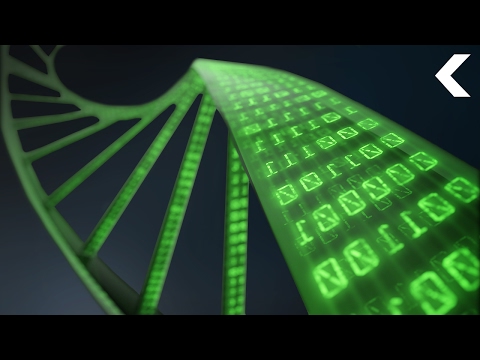
Microsoft Plans To Have A DNA Based Computer By 2020

Collapse
X
 
  • Filter
  • Time
  • Show
Clear All
new posts

  • Microsoft Plans To Have A DNA Based Computer By 2020

    It’s durable, exponentially scalable, and it’ll last millennia, if not millions of years.


    http://bigthink.com/philip-perry/mic...mputer-by-2020
    Last edited by dlevere; 06-02-2017, 01:19:59 AM.
    The Hackmaster

  • #2
    Great. Hope it includes ad blockers.

    Comment


    • #3
      Simple sunlight destroys our DNA and gives us cancer, but I don't have a clue about what Microsoft is doing with DNA. I'm also not certain we've ever found an organism that has lived 200 years making me wonder more about how it'll last millions of years. I'm very dumb on this. Why are they making this? Is it susceptible to being damaged by living organisms or viruses?
      July 7, 2019

      https://www.4shared.com/s/fLf6qQ66Zee
      https://www.sendspace.com/file/jvsdbd

      Comment


      • #4
        "Organism" is a pretty broad term. There are trees that have been alive for almost 5,000 years. They're organisms, and they have DNA, same as us. There are animals that effectively don't age, but they do tend to die from injury or disease within a few hundred years regardless of biological immortality. In the ocean, where some of the radiation you mentioned is diminished or filtered entirely, there are things like clams that have established ages over 500 years.

        Comment


        • #5
          I didn't really know that. Up until now all I've known is some turtles live over 100 years and there are some trees that are thousands of years old, and I kind of forgot about that immortal naked mole or whatever it was called too. Still sounds very weird to me to create a computer out of DNA that would last millions of years. Would a biological organism have a chance of transferring something to the DNA machine that would damage it even since there's rogue viruses that just kind of jump from organism to organism cutting and inserting themselves into DNA?
          July 7, 2019

          https://www.4shared.com/s/fLf6qQ66Zee
          https://www.sendspace.com/file/jvsdbd

          Comment


          • #6
            Offhand I'm going to say it's a remote possibility. I don't think it's likely, especially not at first, but it depends on what they're planning. Viruses evolve quickly enough that if we construct anything that looks a little bit like what they already take advantage of, they'll probably sort out a way to jump sooner or later.

            That said, most viruses, including retroviruses, have evolved to exploit living things. That means cells, and therefore an important early step for an invading retrovirus is a sort of handshake between receptors in the victim cell and the proteins in the viral sheath. I'm reasonably certain that you could put a mass of most any retrovirus in a stew of free-floating DNA, even DNA of an organism it infects, and nothing would happen because the virus exists to co-opt cells, not DNA alone. Most viruses appropriate a cell's ability to generate chemical energy and reproduce in order to propagate themselves. Even assuming they can evolve to infect a bunch of free-floating DNA ensconced in silicon, or nearly frozen in a Dewar, doing so would be a complete dead-end.

            Now if we ever try to do the self-healing, organic computers of sci-fi fame, that's a different story. Just storing information chemically in chains of DNA, because we understand how to direct the formation of long strings of it, isn't quite the same thing.
            Last edited by Pyriel; 06-02-2017, 06:03:04 PM.

            Comment

            Working...
            X