 Tweet
Tweet
 'We Won't Make Frankensteins,' Cloning CEO Says
By David Lom and Eric Baculinao
BEIJING — The head of a Chinese firm that is building the world's biggest animal cloning factory has vowed not to use the technology on people — for now, at least.
Biotech company Boyalife Group's $30 million facility in the coastal city of Tianjin will produce embryos of cattle as well as racehorses and contraband-sniffing dogs when it becomes operational next year.
"No, we don't do human cloning, we won't make Frankensteins," said Dr. Xu Xiaochun, its chief executive. "The technology we have is very advanced...[but if uncontrolled] technology can also do damage...Every technology has to have a boundary."
As a 12 year old, Xu became fascinated with plant cloning. Now aged 44, he is leading China's charge to become a world leader in cloning technology.
"Our primary focus is prime quality beef," Xu told NBC News in an exclusive interview, noting that China's cattle industry hasn't traditionally focused on meat production.
However, beef consumption is currently growing at double-digit rates in the country, with imports increasing due to the low quality of China's domestic beef.
The Tianjin plant will initially produce a 100,000 embryos of prime beef cattle per year. That figure is eventually expected to rise to 1 million embryos annually, which will make it the planet's largest animal-cloning operation.
The bomb-sniffing dogs have become "a major force in anti-terrorism campaigns," Xu said, with about 600 cloned dogs working globally.
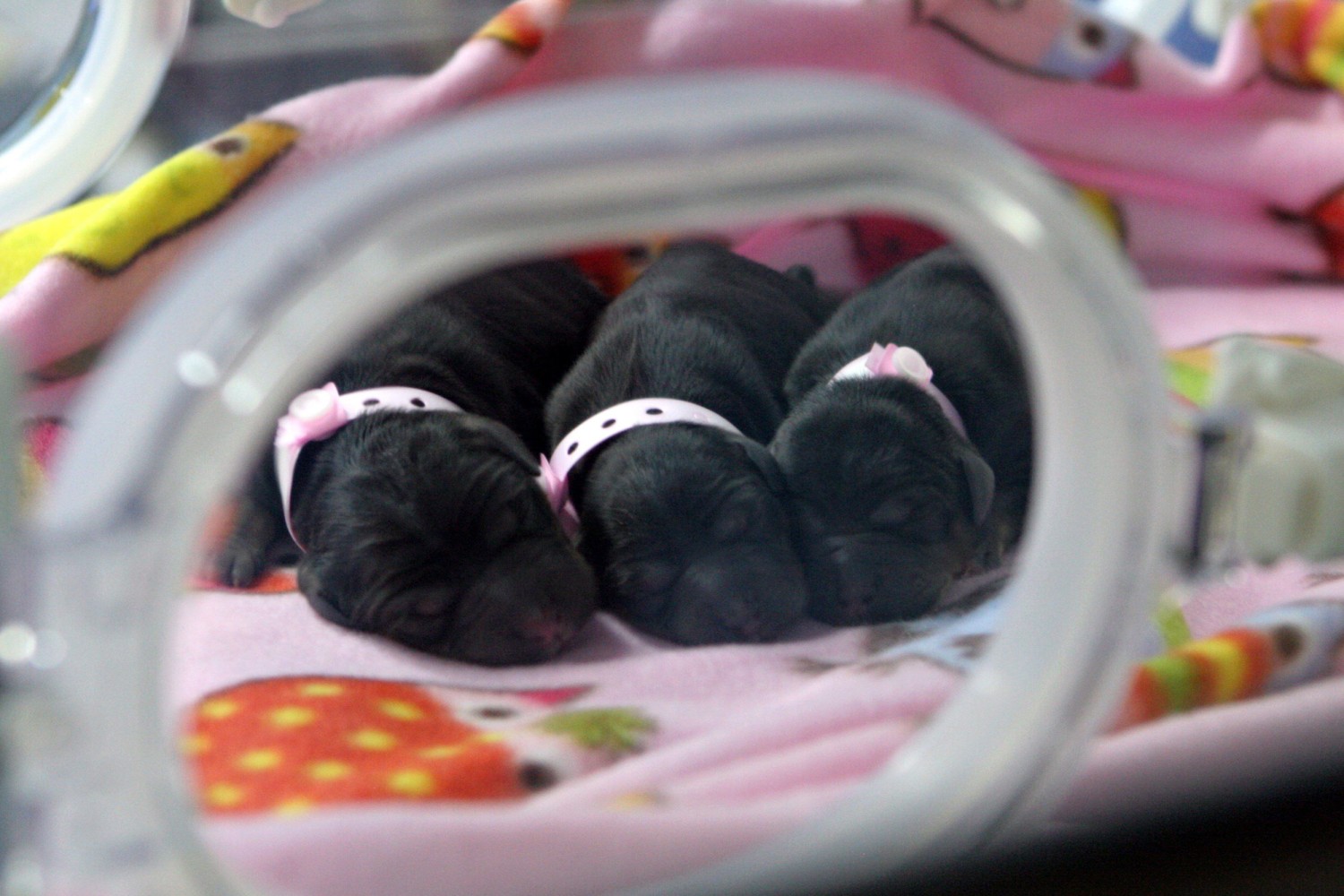
Three cloned puppies snuggle in an incubator at a Boyalife Group facility in Tianjin, China, in 2014. BOYALIFE GROUP/AFP - Getty Images
"We will only select the really top dogs for cloning like selecting only those who could go to Harvard or Peking University," he added.
But Xu suggested society was not yet ready to embrace reproductive human cloning.
"Technology is moving very fast...[and] social values can change," he said. "Maybe in 100 years, in 200 years, people will think differently. [They] may think this technology is going to benefit the human race as a whole...Boyalife will move along with social values."
Xu added: "Different people have different characters...We want to keep this diversity. We really don't want the entire society to become one billion Einsteins."
BEIJING — The head of a Chinese firm that is building the world's biggest animal cloning factory has vowed not to use the technology on people — for now, at least.
Biotech company Boyalife Group's $30 million facility in the coastal city of Tianjin will produce embryos of cattle as well as racehorses and contraband-sniffing dogs when it becomes operational next year.
"No, we don't do human cloning, we won't make Frankensteins," said Dr. Xu Xiaochun, its chief executive. "The technology we have is very advanced...[but if uncontrolled] technology can also do damage...Every technology has to have a boundary."
As a 12 year old, Xu became fascinated with plant cloning. Now aged 44, he is leading China's charge to become a world leader in cloning technology.
"Our primary focus is prime quality beef," Xu told NBC News in an exclusive interview, noting that China's cattle industry hasn't traditionally focused on meat production.
However, beef consumption is currently growing at double-digit rates in the country, with imports increasing due to the low quality of China's domestic beef.
The Tianjin plant will initially produce a 100,000 embryos of prime beef cattle per year. That figure is eventually expected to rise to 1 million embryos annually, which will make it the planet's largest animal-cloning operation.
The bomb-sniffing dogs have become "a major force in anti-terrorism campaigns," Xu said, with about 600 cloned dogs working globally.
Three cloned puppies snuggle in an incubator at a Boyalife Group facility in Tianjin, China, in 2014. BOYALIFE GROUP/AFP - Getty Images
"We will only select the really top dogs for cloning like selecting only those who could go to Harvard or Peking University," he added.
But Xu suggested society was not yet ready to embrace reproductive human cloning.
"Technology is moving very fast...[and] social values can change," he said. "Maybe in 100 years, in 200 years, people will think differently. [They] may think this technology is going to benefit the human race as a whole...Boyalife will move along with social values."
Xu added: "Different people have different characters...We want to keep this diversity. We really don't want the entire society to become one billion Einsteins."

Comment