Announcement

Collapse
No announcement yet.

ID Theft Service Customer Gets 27 Months In Jail

Collapse
X
 
  • Filter
  • Time
  • Show
Clear All
new posts

  • ID Theft Service Customer Gets 27 Months In Jail

    By Brian Krebs

    A Florida man was sentenced today to 27 months in prison for trying to purchase Social Security numbers and other data from an identity theft service that pulled consumer records from a subsidiary of credit bureau Experian.


    Derric Theoc, 36, pleaded guilty to attempting to purchase Social Security and bank account records on more than 100 Americans with the intent to open credit card accounts and file fraudulent tax returns in the victims’ names.

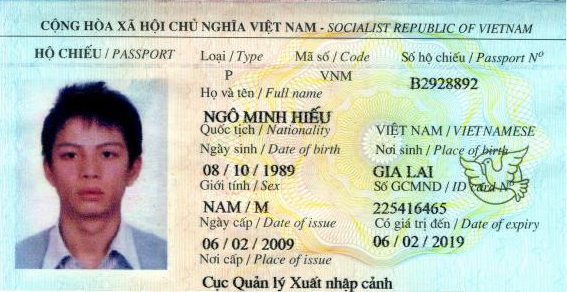
    According to prosecutors, Theoc had purchased numerous records from Superget.info, a now-defunct online identity theft service that was run by Vietnamese individual named Hieu Minh Ngo.


    Ngo’s ID theft service superget.info

    Ngo was arrested in 2012 by U.S. Secret Service agents, after he was lured to Guam by an undercover investigator who’d proposed a business deal to expand Ngo’s personal consumer data stores. As part of a guilty plea, Ngo later admitted that he’d obtained personal information on consumers from a variety of data broker companies by posing as a private investigator based in the United States.

    Among the biggest brokers that Ngo bought from was Court Ventures, a company that was acquired in March 2012 by Experian — one of the three major credit bureaus. Court records show that for almost ten months after Experian completed that acquisition, Ngo continued siphoning consumer data and paying for the information via cash wire transfers from a bank in Singapore.

    After Ngo’s arrest, Secret Service investigators in early 2013 quietly assumed control over his identity theft service in the hopes of identifying and arresting at least some of his more than 1,000 paying customers.

    Theoc is just the latest in a string of identity thieves to have been rounded up for attempting to purchase additional records after the service came under the government’s control. In May, I wrote about another big beneficiary of Ngo’s service: An identity theft ring of at least 32 people who were arrested last year for allegedly using the information to steal millions from more than 1,000 victims across the country.

    In April, this publication featured a story about 28 year old Dayton, Ohio resident Lance Ealy, whom the government alleges also used Ngo’s services to steal financial records used for tax return fraud.

    In October 2013, KrebsOnSecurity broke the news that Experian’s subsidiary was a major contributor to Ngo’s identity theft service. In subsequent hearings on Capital Hill, Experian executives assured lawmakers with the curious contradiction that the company knew who the victims were and that they’d be taken care of, but that there was no evidence that any consumers had actually been harmed as a result of Experian’s oversight.

    It remains unclear if Experian, Court Ventures or any other firm duped by Ngo will ever be made to fully and publicly account for the damage done here, although earlier this year several state attorneys general announced that they’d launched their own investigation into the matter.

    Last edited by dlevere; 10-02-2014, 01:45:06 AM.
    The Hackmaster

  • #2
    Convicted ID Thief, Tax Fraudster Now A Fugitive

    By Brian Krebs


    Lance Ealy, in selfie he uploaded to Twitter before absconding.

    In April 2014, this blog featured a story about Lance Ealy, an Ohio man arrested last year for buying Social Security numbers and banking information from an underground identity theft service that relied in part on data obtained through a company owned by big-three credit bureau Experian.

    Earlier this week, Ealy was convicted of using the data to fraudulently claim tax refunds with the IRS in the names of more than 175 U.S. citizens, but not before he snipped his monitoring anklet and skipped town.

    On Nov. 18, a jury in Ohio convicted Ealy, 28, on all 46 charges, including aggravated identity theft, and wire and mail fraud. Government prosecutors presented evidence that Ealy had purchased Social Security numbers and financial data on hundreds of consumers, using an identity theft service called Superget.info (later renamed Findget.me).

    The jury found that Ealy used that information to fraudulently file at least 179 tax refund requests with the Internal Revenue Service, and to open up bank accounts in other victims’ names — accounts he set up to receive and withdraw tens of thousand of dollars in refund payments from the IRS.

    The identity theft service that Ealy used was dismantled in 2013, after investigators with the U.S. Secret Service arrested its proprietor and began tracking and finding many of his customers. Investigators later discovered that the service’s owner had obtained much of the consumer data from data brokers by posing as a private investigator based in the United States.

    In reality, the owner of Superget.info was a Vietnamese man paying for his accounts at data brokers using cash wire transfers from a bank in Singapore. Among the companies that Ngo signed up with was Court Ventures, a California company that was bought by credit bureau Experian nine months before the government shut down Superget.info.

    Court records show that Ealy went to great lengths to delay his trial, and even reached out to this reporter hoping that I would write about his allegations that everyone from his lawyer to the judge in the case was somehow biased against him or unfit to participate in his trial. Early on, Ealy fired his attorney, and opted to represent himself. When the court appointed him a public defender, Ealy again choose to represent himself.

    “Mr. Ealy’s motions were in a lot of respects common delay tactics that defendants use to try to avoid the inevitability of a trial,” said Alex Sistla, an assistant U.S. attorney in Ohio who helped prosecute the case.

    Ealy also continued to steal peoples’ identities while he was on trial (although no longer buying from Superget.info), according to the government. His bail was revoked for several months, but in October the judge in the case ordered him released on a surety bond.

    It is said that a man who represents himself in court has a fool for a client, and this seems doubly true when facing criminal charges by the U.S. government. Ealy’s trial lasted 11 days, and involved more than 70 witnesses — many of the ID theft victims. His last appearance in court was on Friday. When investigators checked in on Ealy at his home over the weekend, they found his electronic monitoring bracelet but not Ealy.

    Ealy faces up to 10 years in prison on each count of possessing 15 or more unauthorized access devices with intent to defraud and using unauthorized access devices to obtain items of $1,000 or more in value; up to five years in prison on each count of filing false claims for income tax refunds with the IRS; up to 20 years in prison on each count of wire fraud and each count of mail fraud; and mandatory two-year sentences on each count of aggravated identity theft that must run consecutive to whatever sentence may ultimately be handed down. Each count of conviction also carries a fine of up to $250,000.

    I hope they find Mr. Ealy soon and lock him up for a very long time. Unfortunately, he is one of countless fraudsters perpetrating this costly and disruptive form of identity theft. In 2014, both my sister and I were the victims of tax ID theft, learning that unknown fraudsters had already filed tax refunds in our names when we each filed our taxes with the IRS.

    I would advise all U.S. readers to request a tax filing PIN from the IRS (sadly, it turns out that I applied for mine in February, only days after the thieves filed my tax return). If approved, the PIN is required on any tax return filed for that consumer before a return can be accepted. To start the process of applying for a tax return PIN from the IRS, check out the steps at this link. You will almost certainly need to file an IRS form 14039 (PDF), and provide scanned or photocopied records, such a drivers license or passport.

    To read more about other ID thieves who were customers of Superget.info that the Secret Service has nabbed and put on trial, check out the stories in this series. Ealy’s account on Twitter is an also an eye-opener.
    The Hackmaster

    Comment


    • #3
      ID Theft Service Proprietor Gets 13 Years

      By Brian Krebs

      A Vietnamese man who ran an online identity theft service that sold access to Social Security numbers and other personal information on more than 200 million Americans has been sentenced to 13 years in a U.S. prison.


      Vietnamese national Hieu Minh Ngo was sentenced to 13 years in prison for running an identity theft service.

      Hieu Minh Ngo, 25, ran an ID theft service variously named Superget.info and findget.me. Ngo admitted hacking into or otherwise illegally gaining access to databases belonging to some of the world’s largest data brokers, including a Court Ventures, a subsidiary of the major consumer credit bureau Experian.

      Ngo’s service sold access to “fullz,” the slang term for packages of consumer data that could be used to commit identity theft in victims’ names. The government says Ngo made nearly $2 million from his scheme.

      The totality of damage caused by his more than 1,300 customers is unknown, but it is clear that Ngo’s service was quite popular among ID thieves involved in filing fraudulent tax refund requests with the U.S. Internal Revenue Service (IRS). According to the Justice Department, the IRS has confirmed that 13,673 U.S. citizens, whose stolen PII was sold on Ngo’s websites, have been victimized through the filing of $65 million in fraudulent individual income tax returns.

      “From his home in Vietnam, Ngo used Internet marketplaces to offer for sale millions of stolen identities of U.S. citizens to more than a thousand cyber criminals scattered throughout the world,” said Assistant Attorney General Leslie R. Caldwell, in a press release. “Criminals buy and sell stolen identity information because they see it as a low-risk, high-reward proposition. Identifying and prosecuting cybercriminals like Ngo is one of the ways we’re working to change that cost-benefit analysis.”

      Superget.info allowed users search for specific individuals by name, city, and state. Each “credit” cost USD $1, and a successful hit on a Social Security number or date of birth cost 3 credits each. The more credits you bought, the cheaper the searches were per credit: Six credits cost $4.99; 35 credits cost $20.99, and $100.99 bought you 230 credits. Customers with special needs could avail themselves of the “reseller plan,” which promised 1,500 credits for $500.99, and 3,500 credits for $1000.99.


      Lance Ealy, one of Ngo’s customers, is now in prison for tax ID theft.

      Ngo was arrested in 2013, after he was lured to Guam with the offer of access to more consumer data by an undercover U.S. Secret Service agent. Ngo had been facing more than 24 years in federal prison, but his sentence was lightened because he cooperated with investigators to secure the arrest of at least a dozen of his U.S. based customers. Among them was an Ohio man who led U.S. Marshals on a multi-state pursuit after his conviction on charges of filing phony tax refund requests with the IRS. Investigators close to the case say additional arrests of Ngo’s former customers are pending.

      It remains unclear what, if any, consequences there may be going forward for Experian or its subsidiary, Court Ventures. Ngo gained access to the latter’s consumer database by posing as a private investigator based in the United States. In March 2012, Court Ventures was acquired by Experian, and for approximately ten months past that date, Ngo continued paying for his customers’ data searches via cash wire transfers from a bank in Singapore.

      In December 2013, an executive from big-three credit reporting bureau Experian told Congress that the company was not aware of any consumers who had been harmed by an incident. Clearly, the facts unveiled in Ngo’s sentencing show otherwise.

      I first wrote about Ngo’s service in November 2011. For more on the fallout from this investigation, see this series.
      The Hackmaster

      Comment

      Working...
      X