 Tweet
Tweet
Topic
By Julian Hill

"Virtual Console is the perfect way to rediscover your favourite titles from yesteryear, or pick up a game you might have missed the first time around!" Or at least it is if Nintendo's website is to be believed. "Jump into classic adventures and even create a Restore Point at any time to resume your game later. Before [on the Wii] you could only resume your game where you last left it. But now [on the 3DS], you can create a Restore Point at any time you like and go back to it as many times as you like. So, if you create a Restore Point at the end of each level, you'll be able to start from this position again if you die."
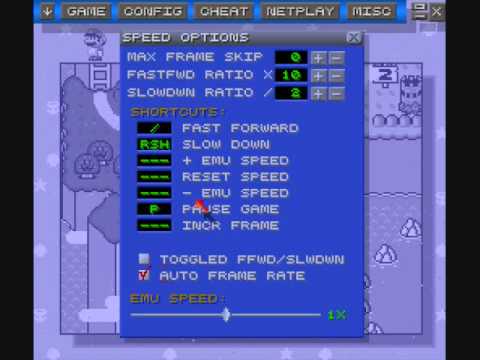
It's strange that Nintendo go to such length to explain this "new" feature around as if it were some ground breaking gaming revelation. For as long as emulators have existed so have save states and anyone who has spent any time playing ROMs on a PC will find themselves unconsciously pressing shift F1 the second they get past a particularly problematic area. Even though Nintendo may label them "restore points" they are nothing new to most retro devotees.
In the era of cartridge gaming the ability to save required an on-cartridge battery, adding expense to the manufacturer. Consequently most didn't bother investing further and either made the player write down long complex passwords or simply expected the player to finish a game in one go. Some of the best developers even considered how a lack of save function could mean that some players would never see beyond the first few levels. It's the reason the warp pipes are said to exist in 'Super Mario Bros' and perhaps explains why so many level select codes exist in the games of yesteryear . To reflect our changing approach to games the ability to select any stage by inputting a code on the title screen has been replaced by most games automatically saving our progress at every new point in the game. We can now confidently and abruptly end a modern game knowing that next time we play we can pick up exactly where we left off. Our progress has been recorded without us having to do anything at all. There's few new games where you have to start at the beginning each time you play, but at most you'll need to redo a short section but only due to being between automatic save points.

Today's Game is Never Over
Nowadays dying mid boss fight is an inconvenience and you'll be put back to a point before you started the fight. In the early days of gaming, dying mid boss fight was game over; the game put you back to the title screen. In fact, the phrase "Game Over" though synonymous with video games has largely disappeared. Designers want you to stick with a game as long as possible and modern games are intended to be finished the game a quickly as possible so they feel compelled to buy DLC. A "game over" screen clearly signposts a point when the player can turn off, so as a result most mainstream games don't have them and instead have a "continue" screen. There's less jeopardy in games now, fewer absolute "Game Overs".
It explains why when we return to old games now we find them so hard, we have to approach them knowing that silly mistakes can cost hours of progress in a game rather than just the last couple of minutes. Save states may have initially existed to allow a player to quit whenever they liked, but they have evolved to replicate modern games and their safety nets. As a result, when you play an emulated retro game it's hard to resist the temptation to save after every tricky part. No gamer schooled on current games wants to go back to the start of a level after they fail to beat the boss, they want to go back to the start of the boss fight with all their health and ammo restored. Save states allow this, a careless death can be undone simply by loading an earlier save. In theory this would allow any player to perform a perfect run through any game, saving every few seconds and reloading even when the most minor of mistake is made.
However, you have to wonder if this makes the experience of playing old games better or worse? By introducing an element that was never meant to be in a game in the first place, the save state has affected the game in a way the designers could never have foreseen. Even the hardest of games can be completed as failure is removed. Difficulty is now defined by a player's restraint and how often a they give into temptation to artificially save their progress.
Retro Gaming Safety Nets
With Nintendo now including this feature in their own "legacy" downloads it almost feels like they have sanctioned the use of save states, or "Restore Points" as they call them. What once seemed like cheating now feels like a legitimate way of playing. The very people who have sold you the game have not only included the feature but promoted it. The cynical would say that this is perhaps because they want you to finish the notoriously hard older games, to do so means you'll buy more. Playing 'Mega Man' on a cartridge is a hard experience, with brutally hard bosses and unforgiving jumps over vanishing blocks. Playing with save states makes it easy, as you could save after every jump and simply reload if you put a foot wrong. With the game's difficulty neutered the ending of 'Mega Man' can be seen in an hour or so. This is pleasing for the player and equally good for Nintendo as they have ten more 'Mega Man' games to sell on their virtual eShop. A frustrating hard game will not make a customer want to buy more. A fun easy and finished game will.
Whether it makes someone want to buy a sequel or not, clearly the simple fact that they make seeing the ending much more likely is no doubt a big perk of save states. A game may have an incredible second level but it's all for nought if a player is trapped behind the wall of difficulty that's level one.
Artificially saving removes frustration and opens up games. They make it possible to see everything in a game. If the price for this accessibility is difficulty perhaps it's worth paying. With a bigger game buffet to choose from and with less time or patience, does a modern gamer want to spend time wrestling with a difficult retro game? They may have been designed to take hours or even days of devoted time to finish but that's time most of us don't have with our modern life of work and childcare. However, knowing an old game can be completed in an hour using save states means it's suddenly something that can be started and finished on a journey to work.
But what do you think? Does the (now official) inclusion of save states across downloaded games enhance or ruin them? Just because it's a feature that's there doesn't mean it needs to be used of course, but is sometimes the temptation too great to resist? Maybe you've now fallen in love with a game series as a result of actually being able to make some headway in a previously inaccessible first title. Make your thoughts known in the comments below and don't panic if you make a mistake, you can simply reload the page - that's the beauty of modern technology after all!
By Julian Hill
"Virtual Console is the perfect way to rediscover your favourite titles from yesteryear, or pick up a game you might have missed the first time around!" Or at least it is if Nintendo's website is to be believed. "Jump into classic adventures and even create a Restore Point at any time to resume your game later. Before [on the Wii] you could only resume your game where you last left it. But now [on the 3DS], you can create a Restore Point at any time you like and go back to it as many times as you like. So, if you create a Restore Point at the end of each level, you'll be able to start from this position again if you die."
It's strange that Nintendo go to such length to explain this "new" feature around as if it were some ground breaking gaming revelation. For as long as emulators have existed so have save states and anyone who has spent any time playing ROMs on a PC will find themselves unconsciously pressing shift F1 the second they get past a particularly problematic area. Even though Nintendo may label them "restore points" they are nothing new to most retro devotees.
In the era of cartridge gaming the ability to save required an on-cartridge battery, adding expense to the manufacturer. Consequently most didn't bother investing further and either made the player write down long complex passwords or simply expected the player to finish a game in one go. Some of the best developers even considered how a lack of save function could mean that some players would never see beyond the first few levels. It's the reason the warp pipes are said to exist in 'Super Mario Bros' and perhaps explains why so many level select codes exist in the games of yesteryear . To reflect our changing approach to games the ability to select any stage by inputting a code on the title screen has been replaced by most games automatically saving our progress at every new point in the game. We can now confidently and abruptly end a modern game knowing that next time we play we can pick up exactly where we left off. Our progress has been recorded without us having to do anything at all. There's few new games where you have to start at the beginning each time you play, but at most you'll need to redo a short section but only due to being between automatic save points.
Today's Game is Never Over
Nowadays dying mid boss fight is an inconvenience and you'll be put back to a point before you started the fight. In the early days of gaming, dying mid boss fight was game over; the game put you back to the title screen. In fact, the phrase "Game Over" though synonymous with video games has largely disappeared. Designers want you to stick with a game as long as possible and modern games are intended to be finished the game a quickly as possible so they feel compelled to buy DLC. A "game over" screen clearly signposts a point when the player can turn off, so as a result most mainstream games don't have them and instead have a "continue" screen. There's less jeopardy in games now, fewer absolute "Game Overs".
It explains why when we return to old games now we find them so hard, we have to approach them knowing that silly mistakes can cost hours of progress in a game rather than just the last couple of minutes. Save states may have initially existed to allow a player to quit whenever they liked, but they have evolved to replicate modern games and their safety nets. As a result, when you play an emulated retro game it's hard to resist the temptation to save after every tricky part. No gamer schooled on current games wants to go back to the start of a level after they fail to beat the boss, they want to go back to the start of the boss fight with all their health and ammo restored. Save states allow this, a careless death can be undone simply by loading an earlier save. In theory this would allow any player to perform a perfect run through any game, saving every few seconds and reloading even when the most minor of mistake is made.
However, you have to wonder if this makes the experience of playing old games better or worse? By introducing an element that was never meant to be in a game in the first place, the save state has affected the game in a way the designers could never have foreseen. Even the hardest of games can be completed as failure is removed. Difficulty is now defined by a player's restraint and how often a they give into temptation to artificially save their progress.
Retro Gaming Safety Nets
With Nintendo now including this feature in their own "legacy" downloads it almost feels like they have sanctioned the use of save states, or "Restore Points" as they call them. What once seemed like cheating now feels like a legitimate way of playing. The very people who have sold you the game have not only included the feature but promoted it. The cynical would say that this is perhaps because they want you to finish the notoriously hard older games, to do so means you'll buy more. Playing 'Mega Man' on a cartridge is a hard experience, with brutally hard bosses and unforgiving jumps over vanishing blocks. Playing with save states makes it easy, as you could save after every jump and simply reload if you put a foot wrong. With the game's difficulty neutered the ending of 'Mega Man' can be seen in an hour or so. This is pleasing for the player and equally good for Nintendo as they have ten more 'Mega Man' games to sell on their virtual eShop. A frustrating hard game will not make a customer want to buy more. A fun easy and finished game will.
Whether it makes someone want to buy a sequel or not, clearly the simple fact that they make seeing the ending much more likely is no doubt a big perk of save states. A game may have an incredible second level but it's all for nought if a player is trapped behind the wall of difficulty that's level one.
Artificially saving removes frustration and opens up games. They make it possible to see everything in a game. If the price for this accessibility is difficulty perhaps it's worth paying. With a bigger game buffet to choose from and with less time or patience, does a modern gamer want to spend time wrestling with a difficult retro game? They may have been designed to take hours or even days of devoted time to finish but that's time most of us don't have with our modern life of work and childcare. However, knowing an old game can be completed in an hour using save states means it's suddenly something that can be started and finished on a journey to work.
But what do you think? Does the (now official) inclusion of save states across downloaded games enhance or ruin them? Just because it's a feature that's there doesn't mean it needs to be used of course, but is sometimes the temptation too great to resist? Maybe you've now fallen in love with a game series as a result of actually being able to make some headway in a previously inaccessible first title. Make your thoughts known in the comments below and don't panic if you make a mistake, you can simply reload the page - that's the beauty of modern technology after all!